The lockup goes everywhere your brand name appears — channel art, thumbnails, watermarks. Cream serif on dark; ink serif on light. Keep the two-tone (serif + script) intact.
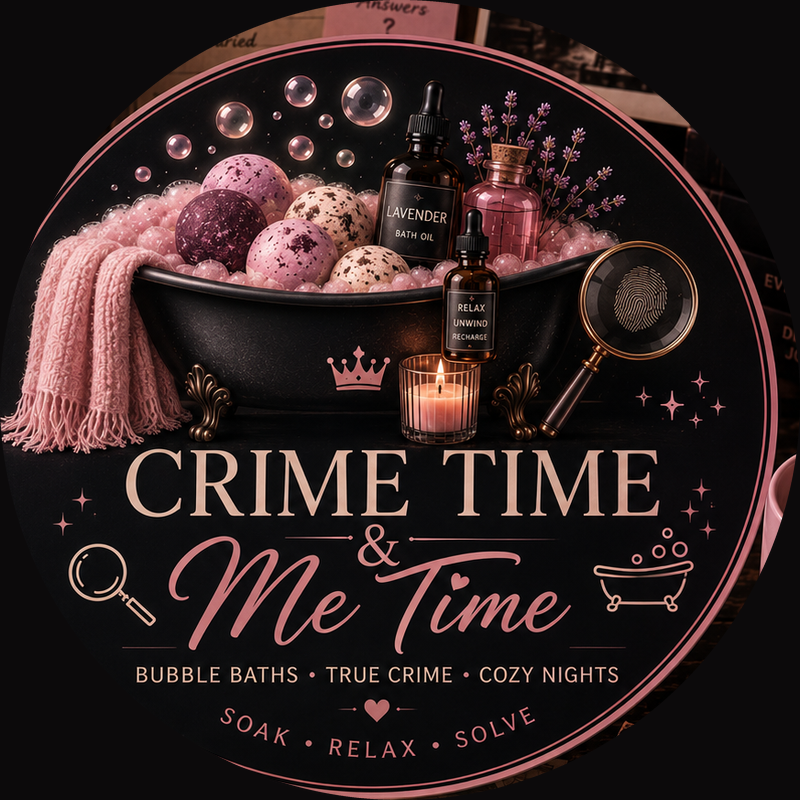
Your emblem — the bathtub, the magnifying glass, the case file, the candle. It IS your profile picture. The simplified fingerprint-glass variant keeps you recognizable where the full scene would muddy: comment threads and tiny thumbnails.


Two marks, one identity. Lead with the full badge on every profile. Drop to the fingerprint-glass mark only at tiny sizes where the scene loses legibility — it stays unmistakably yours.
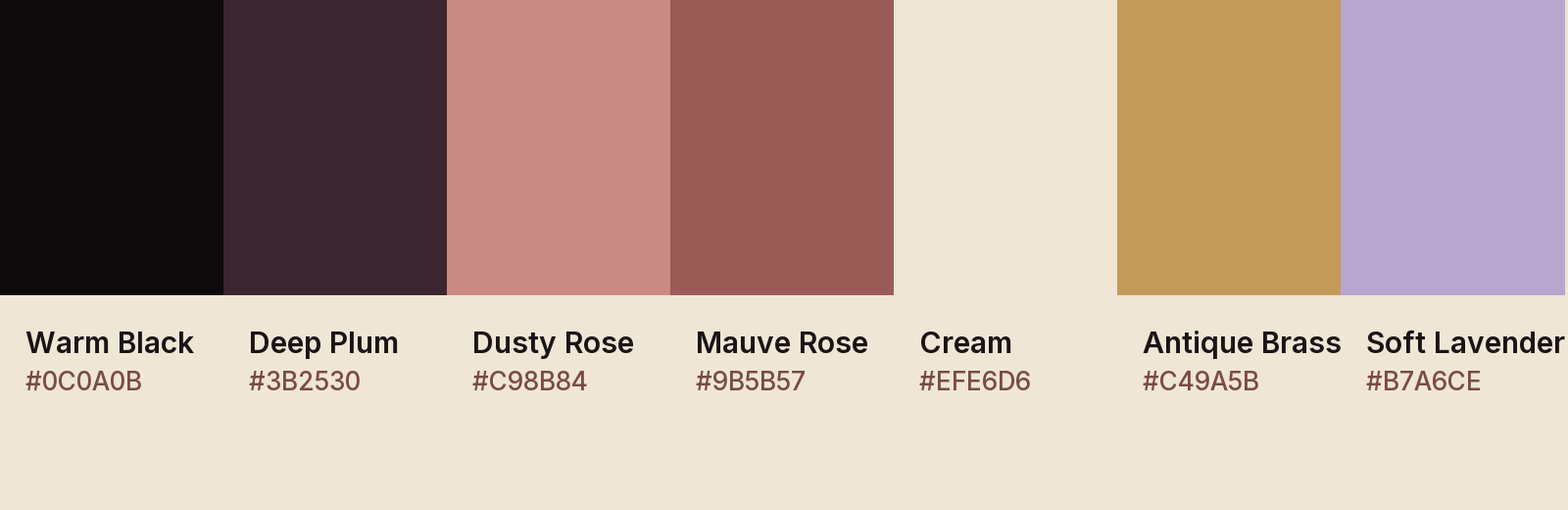
Download small markWarm black grounds everything; dusty rose and mauve carry the warmth; cream is your type on dark; brass is the one gold accent. Keep these exact values and your feed reads as one world.
Fraunces sets headlines and the "CRIME TIME" wordmark; Inter carries everything you read. Two accents, used sparingly — Alex Brush for the "& Me Time" flourish (never a whole sentence), and IBM Plex Mono for case-file tags and numbers.
The same badge across all four platforms — instant recognition. It's already circular, so it crops cleanly to every platform's round frame.
Use the same image everywhere. It's built to read at a glance, even shrunk to a phone thumbnail.
At comment size the full scene gets busy — the fingerprint-glass mark stays crisp and on-brand.
Composed and ready — the wordmark sits in the mobile-safe center so nothing gets cut on a phone. Upload as-is.
1640 × 624
To use: download and upload straight to your Facebook Page cover slot. Text stays inside the safe center on both desktop and mobile.
Download Facebook coverFull 2560×1440 with your wordmark inside the all-device safe area (1546×423) — it reads on a phone, a laptop, and a living-room TV without clipping.
2560 × 1440 · safe 1546 × 423
To use: upload to YouTube channel customization → Branding → Banner image. The wordmark stays within the TV-safe zone, so it's never cut off.
Download YouTube bannerCopy-and-paste for all four platforms. Each leads with "Hosted by Sheila Foley", each fits its character limit, each keeps the voice warm and victim-first. Hit copy, paste into the app, done.
The rule under everything: cozy, credible, and victim-first. This is what makes a stranger hit follow after one video — and what keeps the brand kind.
The creators you named — not to copy, but to understand the moves you're drawn to. Each one gives your channel something the others can't.
A former fashion trend-forecaster turned victim-first true-crime storyteller whose "10 to Life" channel pairs thorough research with genuine empathy for victims and their families.
A YouTube documentarian who tells deeply researched, multi-part true-crime stories in a warm, conversational "let's sit down and talk about this together" voice, with victims squarely at the center.
A former police sergeant and undercover detective (and Big Brother 16 winner) who brings a real investigator's procedural lens to true-crime storytelling.
Paul, a North Carolina host with an English/Creative Writing background, covers true crime, courtroom drama, and unsolved mysteries with warmth, narrative craft, and gentle humor — the friend-on-the-couch approach.
An Emmy-winning broadcast journalist with a nearly 40-year career who now pours that hard-news credibility into long-form true-crime storytelling and interviews.
Crime Time and Me Time owns the intersection almost no one fully holds: true crime that is credible AND cozy AND deeply victim-respectful at the same time. Most cozy channels trade rigor for vibes; most serious ones trade warmth for authority. Sheila Foley threads all five influences into one lane — Annie Elise's victim-first, warning-signs framing; Stephanie Harlowe's over-researched, "sit down and talk about her" intimacy; Derrick Levasseur's calm investigator's lens that explains the "why" behind the evidence; Reporting Live From My Sofa's living-room-as-format warmth where the coziness IS the delivery; and Ashleigh Banfield's plain-spoken, sourced "here's where the facts stand" credibility. The result is a nightly ritual: a bath running, a candle lit, tea in hand, and a case file opened with care — where the comfort of the setting exists to serve remembrance, not spectacle. This is the space nobody else fully owns: the calm, sourced authority of a newsroom, the intimacy of a friend on the couch, and an unbreakable rule that the person harmed comes first — packaged as the softest, safest place to sit with a hard story at the end of a long day.
You don't need a new idea every week — just these five, each mapped to an influence in your DNA. Master one, then add the next.
Every case opens by naming the victim and why their story matters before a single detail of the crime, anchoring the audience to the person first. The research then carries the rest, framed around warning signs, timeline, and justice for the person harmed.
An unsolved case revisited by stating plainly what is known versus unknown, straight down the lens, so the facts feel sourced and serious. It keeps names and open questions alive with calm, credible authority rather than speculation.
A single case researched for a week or two and built into a complete, multi-part sit-down so viewers leave with no unanswered questions. Intimacy comes from thoroughness and respect — the victim humanized as if she were your sister or friend.
Opened from the real cozy setup — candle lit, tea in hand, bath running — with one small genuine personal beat before easing into the case. The coziness is the delivery, lowering the guard so viewers settle in like a friend just joined them.
A 'here's how an investigator would read this' beat walks through one timeline or piece of evidence step by step, then gently invites viewers to sit with the facts together. It keeps the victim and family at the center and treats the audience as thoughtful partners, never a witch hunt.